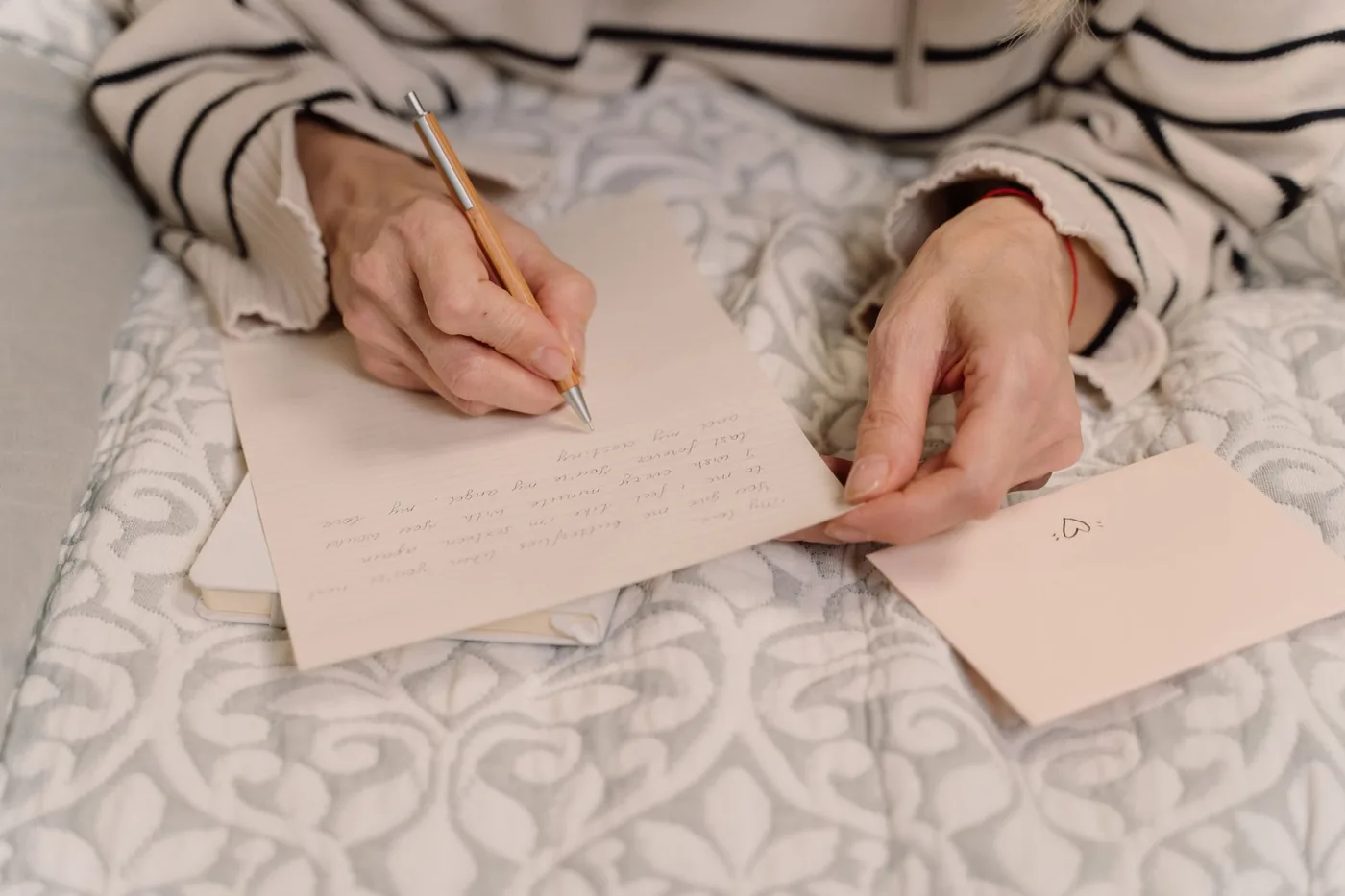
You sit down to write a thank-you note and immediately sound unlike yourself. The first sentence is formal, the second repeats the first, and suddenly a small kindness seems to require a speech. The difficulty is often the imagined standard. You picture a perfect note instead of the person who will receive it. A useful beginning is much simpler: name what happened and write one honest detail that could only belong to that occasion.
The note can be handwritten, typed or sent by email. Choose a form that suits the person and the circumstances. A friend who finds handwriting difficult to read may prefer a clear email. Someone who enjoys keeping cards may appreciate a few lines on paper. The thoughtfulness lies in attention, not in following a rule that one medium is always more meaningful. Make the message easy to receive and appropriate to the connection you already share.
Start with the particular thing
Instead of thanking someone for everything, name the meal, the lift home, the time they spent listening or the book they chose. Specificity makes the note feel addressed to a person rather than produced for an occasion. You do not need a dramatic detail. Remembering the bowl of soup waiting after a long journey can say more than several large adjectives about generosity. Write the detail in ordinary language before worrying about an elegant opening.
If the reason for writing is less concrete, begin with a recent moment. Perhaps you enjoyed a conversation or found yourself remembering an afternoon together. Say so without inventing a special anniversary to justify contact. An unexpected note can be welcome simply because someone thought to send it. Keep the tone proportionate, especially if you have not been in touch for a while. Warmth need not arrive with an expectation of an equally thoughtful reply.
Describe the effect without exaggerating it
After naming the thing, explain what it made possible or how it felt. A practical favor might have taken pressure off a difficult day. A thoughtful gift might have shown that someone remembered your interests. This is where the note becomes personal. Avoid making claims that feel larger than the occasion merely because you want the recipient to know you care. A believable small sentence usually has more weight than a declaration you would never say aloud.
Be careful not to make the recipient responsible for managing your feelings. A note of appreciation should not quietly become a request for reassurance, forgiveness or more attention. If there is a difficult conversation to have, give it an appropriate space of its own. Keeping the purpose clear lets the note offer something without attaching a hidden obligation. The person can receive the thanks without having to work out what response will keep everything comfortable.
Let your voice remain recognizable
Read the draft aloud. If a phrase would make you hesitate in conversation, try a simpler version. This does not mean every sentence must sound casual. It means the note should feel like it came from you. A little awkwardness can be more appealing than language polished until no particular person remains behind it. Use words you understand and would naturally choose, especially when writing about something that matters to you.
Do not confuse brevity with lack of care. A small card can hold an entire message if the sentences do useful work. Equally, a longer letter is welcome when you have stories to share and the recipient enjoys them. Match the length to the occasion and the reader. You are not filling a required space. Leaving part of a page blank is perfectly reasonable when you have already said what you wanted to say.
Share a memory with enough context
If you include a memory, help the reader find the same moment. Mention the place, the people involved or one small event that made it distinctive. Be sensitive to private details and differences in how people remember an occasion. A warm note is not the place to insist on your version of a disputed story. Choose a memory you can offer generously, without using it to correct someone else's account or reopen an old disagreement.
For a note that may be kept, a date can be useful. So can the names of people who might be unfamiliar to a future reader. These details do not need to make the letter sound historical. They simply keep a memory connected to its circumstances. If the note includes a photograph, consider whether the people pictured would be comfortable with it being shared and whether the image reveals anything they would prefer to keep private.
End with a clear, comfortable close
A closing can look forward to another ordinary meeting or simply repeat the essential thanks in a different form. Avoid a vague promise to get together if you do not intend to follow through. If you do want to suggest something, make it easy to answer and separate it from the appreciation. The recipient should not feel that accepting an invitation is the price of being thanked for something they already did.
Choose a sign-off that fits how you usually address the person. There is no need to make it more intimate or more formal because the message is on paper. Check the name, address and any important details before sending. If the note is digital, verify the recipient and attachments. A little practical care at the end protects the attention you put into the words, especially when your contact list contains people with similar names.
Send it while it still feels like a note
Perfection can become a reason never to send anything. Once the message is clear, kind and accurate, let it go. A delayed thank-you is often still worth sending, but you do not need to explain the delay at such length that it becomes the main subject. Acknowledge it briefly if appropriate, then return to the person and the reason you wanted to write. The note is about appreciation, not a report on your drafting process.
Keep a small supply of suitable paper or a simple digital draft if that makes writing easier next time. Do not build a system so elaborate that another spontaneous thought becomes an administrative task. The useful habit is noticing when someone has done something worth acknowledging and acting on it. A few specific lines can preserve that moment, and give another person a small piece of evidence that their attention reached you.