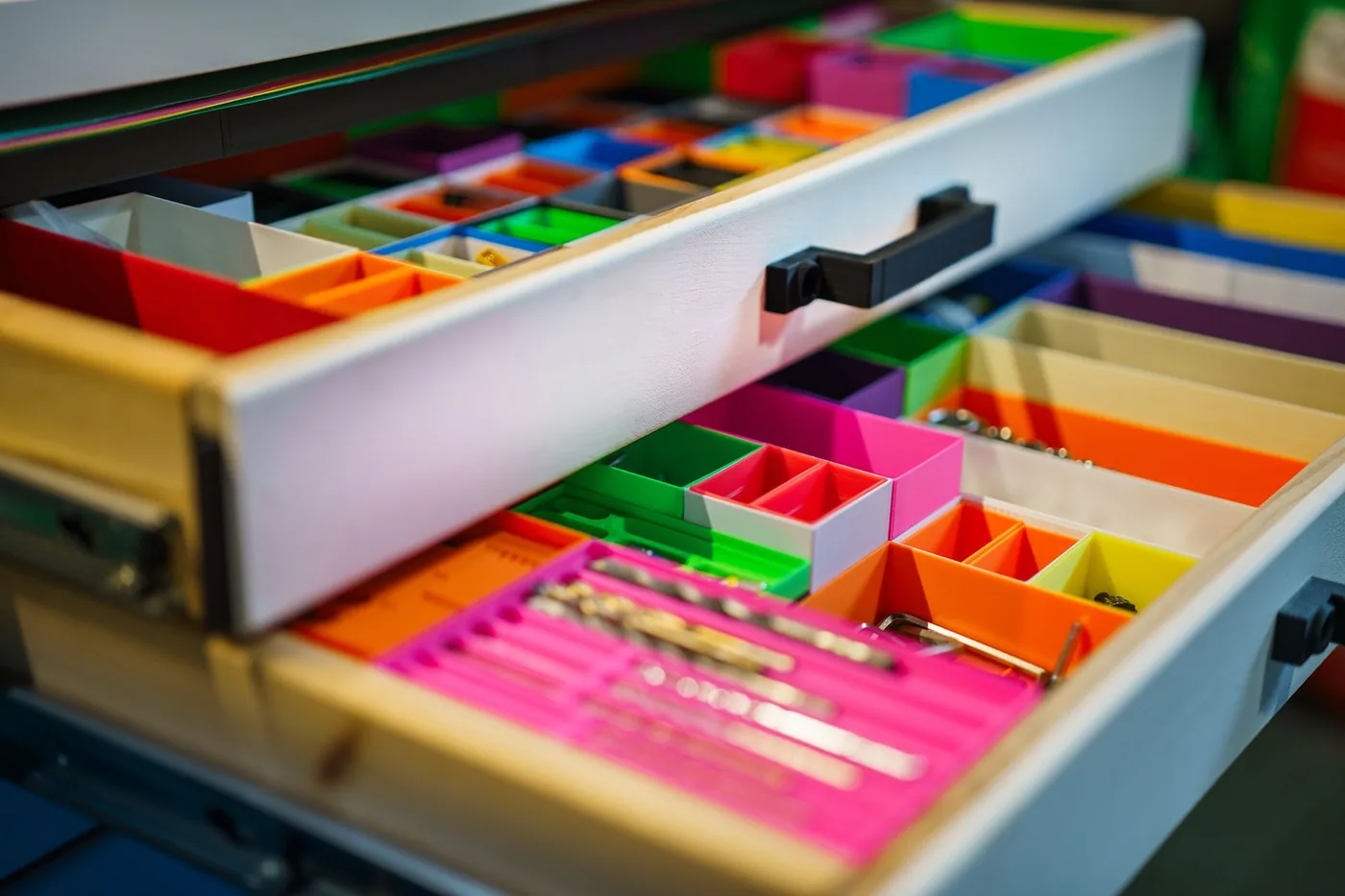
The drawer opens only halfway because a roll of tape has wedged itself behind the scissors. Somewhere beneath the batteries is the small screwdriver you need, although several other screwdrivers have emerged first. It is a familiar household arrangement: useful things collected in one place until the place stops being useful. Improving it does not require a matching storage system. It begins with finding out what is actually in there and what the drawer is meant to do.
Choose a time when you can finish the job without leaving tools scattered around. Keep children and pets away from loose batteries, sharp objects and small parts. Spread the contents on a protected, well-lit surface and keep the drawer itself clear. If you find chemicals, damaged batteries or unidentified items, follow appropriate local disposal guidance. Do not treat an unfamiliar substance or leaking battery as another ordinary object to move into a smaller container.
Give the drawer a specific purpose
A household tools drawer might hold things used for hanging a picture, tightening an accessible handle or opening packaging. It does not need to contain every item associated with home maintenance. Separate sewing supplies, stationery and specialist equipment if they have better homes elsewhere. Defining the purpose makes decisions easier. The question becomes whether an object supports these ordinary tasks, rather than whether it could conceivably be useful one day.
Think about who uses the drawer and what they look for. A shared home benefits from a predictable arrangement more than a clever one that only one person understands. Ask before discarding something you do not recognize. A small plastic piece may belong to equipment someone else maintains. Put uncertain items aside with a note while you find out, rather than returning them anonymously to the bottom of the drawer.
Inspect the tools you already own
Look for damage, corrosion, loose handles and unreadable labels. Use and maintain tools according to their manufacturers' instructions. A damaged tool does not become safe because it is reserved for small jobs. If something needs repair or replacement, keep it out of the active collection until the issue is resolved. Your everyday drawer should contain equipment you can identify and use appropriately, not a mixture of reliable tools and items you must remember to avoid.
Remove unnecessary duplicates only after comparing their roles. Two screwdrivers may have different tips even if they look similar at a glance. A pair of small scissors may do a job that heavier scissors cannot. Keep the differences you actually need and find another home for excess. There is no prize for reducing the collection to an impressive minimum if that leaves you borrowing the same missing tool every month.
Separate power, sharp edges and small parts
Store batteries in a way that prevents short circuits and follows the battery manufacturer's guidance. Keep loose batteries away from metal objects, and take particular care with button or coin cells. Use suitable storage and disposal routes. The back of a kitchen drawer is not a good place for an unidentified collection of old and new batteries. Label what is usable, and avoid mixing categories merely because they fit into the same shallow compartment.
Protect sharp edges and keep small fittings in closed, clearly labeled containers. An old food container may be confusing, especially in a kitchen, so choose storage that cannot easily be mistaken for something edible. Do not pack a compartment so tightly that finding one screw requires tipping everything onto the counter. A few sensible divisions make the contents easier to see and reduce the chance of reaching blindly past something sharp.
Arrange by the task you repeat
Place frequently used items near the front and keep related pieces together. A tape measure, pencil and suitable picture-hanging supplies may form one group. Packaging tape and scissors may form another. Use removable trays or dividers that fit the actual drawer, leaving enough space to lift each tool. Measure before buying organizers. Many tidy-looking inserts waste space when their compartments were designed for a different collection of objects.
Leave a little room for returning things. A drawer that works only when every tool is fitted into one exact position may become disorderly as soon as someone is in a hurry. Broad, recognizable zones are often easier to maintain. If an item needs a special position for safety, make that clear. Otherwise, prefer an arrangement that is understandable after dinner on a busy weekday, rather than one that looks precise for an afternoon.
Keep instructions where they can help
Some items need information that will not fit on the object. A label might identify the appliance a spare part belongs to, while a note can point to a manual stored elsewhere. Use plain descriptions and dates when they are relevant. Avoid a collection of tiny mystery bags marked only spare. If you cannot connect a part with its purpose, the label has not preserved the information you will need when something stops working.
Keep household records separate from the tools themselves. Manuals, purchase details and service contacts may be easier to find in a folder or a clearly organized digital location. Do not put account passwords in an ordinary maintenance note. The drawer can contain a simple reminder of where the records live. That gives a repair question a next step without turning a shallow storage space into an archive of every appliance the household has ever owned.
Know where an ordinary task ends
Owning a tool does not make every repair appropriate to attempt. Electrical, gas, structural and other hazardous work can require qualified help and may be regulated. If you are unsure what a job involves, stop and get suitable advice. The useful role of this drawer is to support appropriate small tasks, not to persuade you to take on something because the equipment happens to be close at hand.
Finish by cleaning the drawer and returning only what belongs. Choose an easy moment to review it occasionally, especially after a project adds new supplies. Put borrowed tools back promptly and label new spares before their purpose is forgotten. The result can look quite ordinary. What matters is that the drawer opens, the useful things are visible and a small household task no longer begins with emptying half the kitchen onto the table.