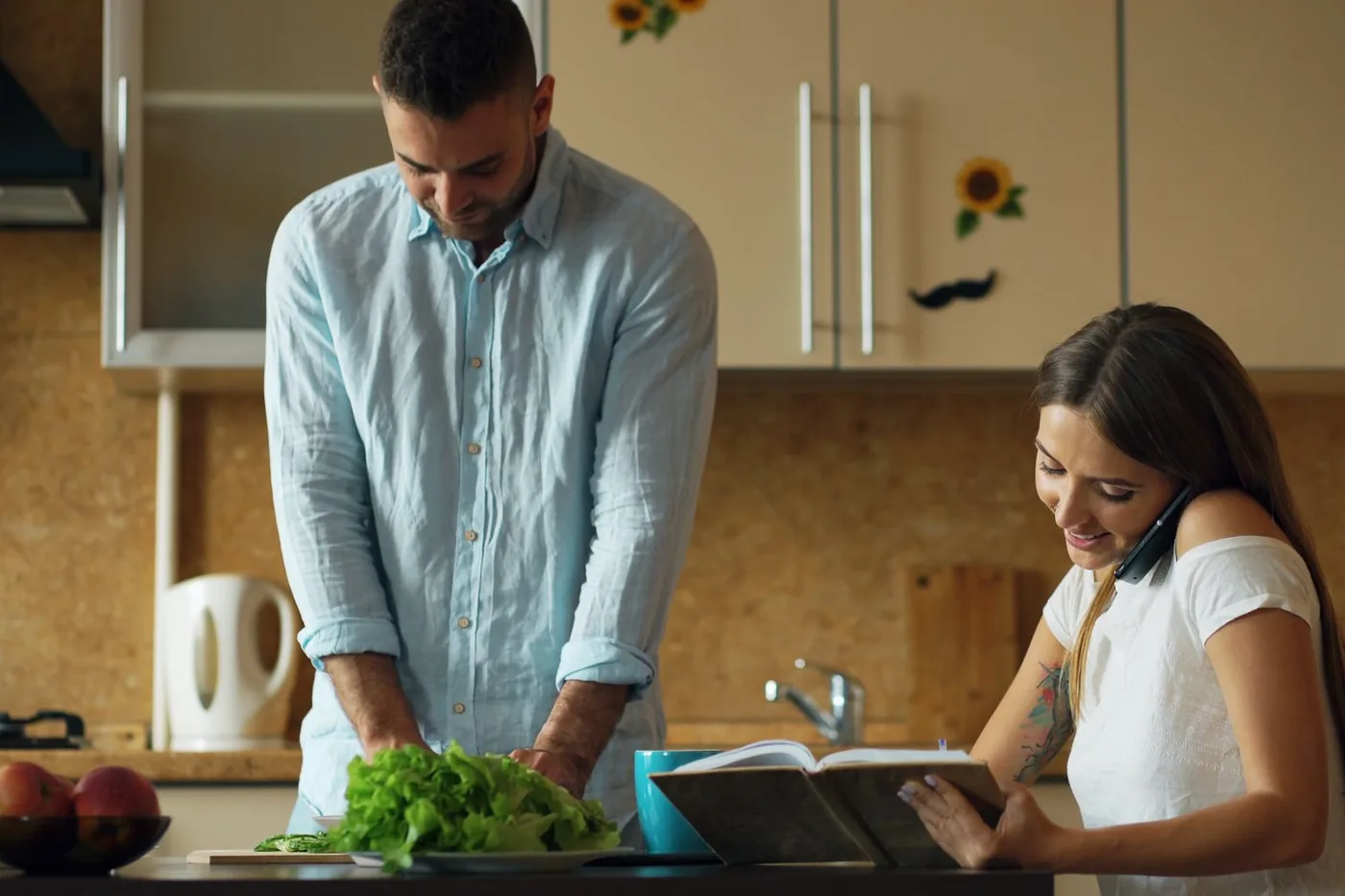
Two people can enter a kitchen with the same pleasant intention and completely different ideas of how dinner should happen. One reads the recipe from beginning to end. The other starts chopping whatever is nearest. Before long, both need the same board, someone has moved the salt and an innocent question about the oven sounds like criticism. Cooking together is easier when the arrangement is discussed before the ingredients come out.
Choose a meal that both people actually want to eat and that fits the time available. A familiar dish is often a better beginning than a complicated recipe selected to make the evening feel special. If one person has been working late, simplicity may be the most considerate choice. Check allergies, preferences and any food-handling requirements, then decide whether the aim is to share all the preparation or simply spend some of the evening in the kitchen together.
Pick a menu with separate pieces
Look for a main dish and one straightforward accompaniment. Pasta with a sauce and a salad, a tray of vegetables with an appropriate protein, or a pot of soup with bread can give each person a clear part. Avoid two dishes that require constant last-minute attention unless you both enjoy that kind of coordination. A meal becomes less sociable when nobody can look up because every element has a narrow moment of perfection.
Read the recipes together and check the equipment. A shared plan should include the pan, the oven temperature and where finished food will go. Follow reliable recipes and food-safety guidance for the ingredients, especially raw meat, eggs and leftovers. Having two cooks does not make cross-contamination less important. Decide which boards, knives and utensils are for which task before preparing food, and keep any necessary separation clear throughout the cooking.
Agree on roles without assigning a ranking
One person can handle the warm dish while the other prepares the accompaniment and table. Another evening, you might switch. A division of work does not need to suggest who is the more capable cook. Ask which task each person would prefer and what help would be useful. If someone wants to learn a technique, make room for that. If they would rather not spend their evening being instructed, respect that too.
Be explicit about tasks that sit between cooking and hosting. Someone needs to find plates, fill water glasses and decide what happens to packaging. Those jobs count as part of making dinner. If one person is managing the stove, answering every question and locating every utensil, the work may be less shared than it appears. A quick look around before you start can prevent one person from quietly becoming the coordinator of everything.
Give each person a little territory
In a small kitchen, a clear work surface matters more than ambition. Put away unrelated objects and identify where each task will happen. One person might use the main counter while the other works at a table. Keep the route to the sink and stove open. Tell each other when carrying something hot or moving behind someone. These ordinary courtesies help the kitchen feel cooperative rather than like a place where you must constantly anticipate collisions.
Collect ingredients for a task in one area instead of carrying the same jar back and forth. If both people need oil or seasoning, agree on where it will sit. Keep sharp tools stable and use equipment appropriately. A rushed search for a knife under a pile of peelings is an avoidable complication. Organization does not need to be precise or beautiful; it just needs to make the next action clear to both people.
Ask before adjusting someone else's dish
Adding salt, turning down a burner or stirring a pan may feel like helping. To the person following a sequence, it may change a decision they have already made. Ask first unless there is an immediate safety issue. A short question leaves room for an explanation and avoids creating a small mystery in the recipe. It also makes it easier to accept a useful suggestion, because the suggestion has not arrived disguised as a correction already performed.
Taste together when appropriate, using clean utensils and safe food-handling practices. Describe what you notice rather than announcing that the other person has done something wrong. A sauce might need more acidity or a little more cooking time. That is a problem in a pan you can solve together. There is little value in turning an ordinary adjustment into evidence about who knows more or who should have been in charge from the beginning.
Use waiting time deliberately
If the meal needs a period in the oven, use some of it to clear the work area and prepare for serving. Leave room to sit or talk as well. Cooking together does not become more enjoyable simply because every pause is filled with another task. A few quiet minutes with the preparation finished can be part of the pleasure, particularly when both people have spent the day making decisions or responding to other people's requests.
Check the main dish at the appropriate time rather than opening the oven repeatedly out of uncertainty. Set a timer and agree who is listening for it. If something takes longer than expected, adjust the rest of the plan. Put the salad back in suitable storage, keep other food safe and let the meal be later. An ordinary delay does not need to become a judgment about whether the evening is going well.
Make sitting down part of the recipe
Before serving, clear enough space for both people to leave the kitchen. Decide what can wait until after dinner and deal promptly with food that needs refrigeration. Turn off equipment as appropriate and make the table usable. Serve portions in a way that lets people choose what suits them. The meal does not need a perfect finish or an elaborate garnish to mark the change from preparation to eating.
Afterward, share the remaining work with the same consideration you gave the cooking. Notice which parts felt easy and which caused friction. Next time, choose a different division or a simpler menu. There is no need to produce a formal review over the dishes. A shared dinner is a repeatable pleasure when both people feel welcome in the process, have a useful part and get to enjoy the food while it is still worth sitting down for.